Our Top Picks
 BOSCH 1617EVSPK 2.25 HP Variable-Speed Router Combo Kit6 in6 x 11.5 x 11.6 inches18.2 poundsCheck on Amazon

What's inside
- Why a plunge router is the right partner for a circle jig
- How circle cutting with a jig actually works
- What to look for in a router for jig work
- The eight routers, reviewed for Jasper circle jig work
- Setting up your first jig-guided circle, step by step in brief
- Frequently asked questions
- Our verdict
- Check prices on Amazon
- A note on how this guide is funded
As an Amazon Associate I earn from qualifying purchases. This post may contain affiliate links at no extra cost to you.
Cutting a clean circle is one of the deceptively hard jobs in speaker building. A driver cutout has to be round, sized to a fraction of an inch, and cut through plywood or MDF without splintering the veneer or wandering off line, because the speaker frame has to drop in, seal against the baffle, and look right doing it. The tool combination that DIY speaker builders settled on for this job is a plunge router riding on a Jasper circle jig: a clear jig plate that mounts under the router, with a pivot pin that drops into a small center hole in the workpiece and a grid of calibrated holes that set the cutting radius. Swing the router around the pin and the bit traces a true circle, pass after pass, until the cutout drops free. Choose the matching recess setting and the same setup cuts the shallow rabbet that lets a driver sit flush with the baffle face.
This guide covers eight routers that can do that work, and it is honest about the differences between them. Six are plunge routers or combo kits that include a plunge base, which is the configuration a circle jig wants, because plunging lets you lower the bit into the material in controlled stages instead of tipping a spinning bit into the edge of a cut. One, the big Makita, is a dedicated plunge router with the most power in this list. One, the smaller cordless DEWALT at the end, is a compact router on the same battery platform as a true cordless plunge model in this guide, and we flag clearly where it differs, because its listing does not name a plunge base and a Jasper pairing needs that question answered before money changes hands. The speakers these baffles are built for range from raw drivers to finished designs such as those in best 12 inch speakers, and the cutting technique is the same whatever the driver size.
Our research focused on what the product listings actually state: motor size in amps or horsepower, speed range where a title gives one, which bases a kit includes, and whether a tool is corded or cordless. Where a specification is not in a listing, this guide does not invent it. Circle jig compatibility in general depends on the jig matching your router’s base and screw pattern, and Jasper publishes fit information by router model, so the final check before buying any router here is confirming that your chosen jig lists your chosen router. That check takes two minutes and prevents the one mismatch that can stall a baffle project on the day you planned to cut it.
Why a plunge router is the right partner for a circle jig
A circle cut in a baffle is not one cut. It is a series of passes at increasing depth, because routing the full thickness of a baffle panel in a single pass overloads the bit, tears the material, and strains the motor. A plunge base is built for exactly this rhythm. The router body slides on two posts against spring pressure, so you position the tool on the jig with the bit clear of the work, start the motor, and press the bit down to a depth set by the plunge stop. Finish the circle, release, adjust the stop deeper, and go again. The pivot pin never leaves its center hole, the radius never changes, and each pass removes a manageable layer. A fixed-base router can be coaxed into similar work by tilting or by starting in a drilled hole, but it is a workaround; the plunge action is the native tool for jig-guided circles.
The second reason is the recess. Flush-mounting a driver means cutting two concentric features: a through-hole for the basket and a wider, shallow counterbore for the frame flange. With a plunge router on a jig, the counterbore is just a shallower setting of the same setup, cut first, with the depth stop holding the bit at flange depth all the way around. Depth control is therefore not a luxury in this application; it is half the job. Features that help here, and that appear across the picks below, are microfine depth adjustment for sneaking up on an exact recess depth, variable speed for matching bit speed to material and bit diameter, and soft start, which keeps a powerful motor from jerking the tool, and the jig, at the moment it starts with the pivot pin seated.
How circle cutting with a jig actually works
The workflow is consistent whatever router you choose. You mark the center of the driver location on the baffle and drill a small pilot hole for the jig’s pivot pin. The jig mounts to the router’s base, the pin drops into the pilot hole, and you select the jig hole that corresponds to the cutout diameter you need; Jasper jigs are laid out so that the hole positions account for the bit diameter, which is why using the bit size the jig’s scale assumes matters. With the router unplugged or its battery removed, you set the bit so the first pass will be shallow. Then you plunge and walk the router around the pin in a steady sweep, letting the bit’s rotation direction work with you rather than against you, and repeat at greater depths until the circle is cut through. Most builders leave the final pass a hair shallow and finish with the panel supported, so the cut disc does not drop and tear the last fibers or damage the bit.
Material choice changes the details but not the method. MDF, the default baffle material in DIY speaker building, cuts cleanly and is forgiving of speed settings, but its dust is fine and unpleasant, so extraction and a mask are part of the job. Baltic birch and other plywoods are stronger and lighter, and reward a sharp bit and a sensible feed rate with crisp edges; rush them and the face veneer can chip at the entry of each pass. The baffles you cut this way end up in cabinets for drivers and finished speakers across the sizes covered in guides like best 10 inch pa speakers and best 15 inch passive speakers, which is why a good circle setup, once owned, tends to get used for years of projects rather than a single build.
What to look for in a router for jig work
A plunge base, included or genuinely available. Combo kits that bundle fixed and plunge bases are the natural fit for this guide, because the fixed base then covers edge work and general routing while the plunge base lives on the jig. Dedicated plunge routers skip the second base and put everything into plunge performance. Either route is valid; a router with no plunge path is not, for this job.
Power matched to your panels. Baffle work means cutting circles in sheet material, pass by pass. Mid-size motors handle that comfortably. The largest router here earns its power on thick, dense panels and big-diameter bits, and on production-style days of many baffles; for occasional single cabinets, the mid-size picks are easier to swing around a pivot all afternoon.
Variable speed. Larger bits should turn slower than small bits, and dense material rewards a considered speed. Most picks here state variable speed in their listings; treat it as close to essential for jig work, where bit diameter and cut diameter both vary by project.
Depth adjustment you can fine-tune. The flush-mount recess lives or dies on depth accuracy. Microfine adjustment, where a listing names it, is the feature that lets you match a flange depth by trial on scrap rather than by hope on the real baffle.
Corded or cordless, honestly assessed. Corded routers run all day and never change character as a battery fades; the cord needs managing so it does not drag across the jig mid-circle. Cordless routers free the sweep completely, which matters when you are walking a tool in a full circle around a pin, but they are sold as tool-only units here, so the battery platform you already own, or must buy into, is part of the real decision.
The eight routers, reviewed for Jasper circle jig work
1. DEWALT DW618PKB Router Kit, Fixed and Plunge Bases, 12-Amp, Soft Start
The DEWALT kit leads this guide because its listing reads like a checklist for circle jig duty: a fixed base and a plunge base in one kit, a 12-amp corded motor, soft start, and a variable speed trigger with a stated top speed of 24,000 RPM. The combo format means the plunge base can stay mounted to your circle jig between projects while the fixed base handles edge profiles and general work, a division of labor that builders who cut baffles regularly come to appreciate quickly. When a new cabinet project starts, the jig is already set up; you are marking centers and drilling pilot holes instead of swapping bases and re-checking fit.
Soft start deserves its mention in the listing. At the start of every circle pass, the router sits balanced on the jig with the pivot pin in a small hole in your workpiece. A motor that snaps to full speed instantly can twist the tool in your hands at that moment; a soft start ramps up gently, so the setup stays planted. Variable speed through the trigger gives you control over bit speed for different bit diameters and materials, and the 12-amp motor sits in the mid-to-upper range of this guide, with enough reserve for repeated passes through dense sheet material without the tool feeling strained at sensible depths per pass.
Who should choose it: the builder who wants one corded kit that covers jig circles and general routing with no battery questions and no second purchase pending. The watch-outs are the usual corded ones: manage the cord so it drapes away from the jig’s swing, and remember that a combo kit’s plunge base still needs its fit with your specific jig confirmed against the jig maker’s router list. As an all-round answer to the question this guide asks, it is the most complete listing here.
2. BOSCH 1617EVSPK 2.25 HP Variable-Speed Router Combo Kit
The Bosch combo kit is the other classic answer, and its listing emphasizes control features: 2.25 HP, variable speed, an exclusive quick-clamp system, microfine depth adjustment, and Constant Response Circuitry. For circle jig work, two of those features speak directly to the job. Microfine depth adjustment is the tool you reach for when a driver flange recess must land at an exact depth; instead of nudging a coarse stop and hoping, you dial small, measured changes, cut a trial arc in scrap, measure the recess against the actual driver frame, and adjust in increments until the flange sits perfectly flush. That trial-and-adjust loop is how good baffles get made, and microfine adjustment is what makes the loop precise rather than frustrating.
Constant Response Circuitry, as Bosch names it, is an electronic system intended to hold the set speed steady as the load on the bit changes, which in a long circular cut through material of varying density means a more consistent cut quality around the full sweep. The quick-clamp system addresses base changes, speeding the swap between the fixed and plunge bases in the kit, which matters in a small workshop where the same motor unit serves every routing job. At 2.25 HP the motor matches the DEWALT kit’s class, squarely in the range that handles baffle panels in sensible passes without excess weight to swing around a pivot pin for hours.
Who should choose it: builders who value depth precision above all, especially those planning flush-mount recesses on visible baffles where a flange sitting a fraction proud or shy is obvious. It is also the natural pick for anyone already comfortable with the Bosch router ecosystem. Watch-outs mirror the DEWALT: confirm jig fit for the plunge base, and plan cord management for full-circle sweeps. Between the two big combo kits, the choice is about which control features you will actually use, and for recess-critical work the microfine depth case is strong.
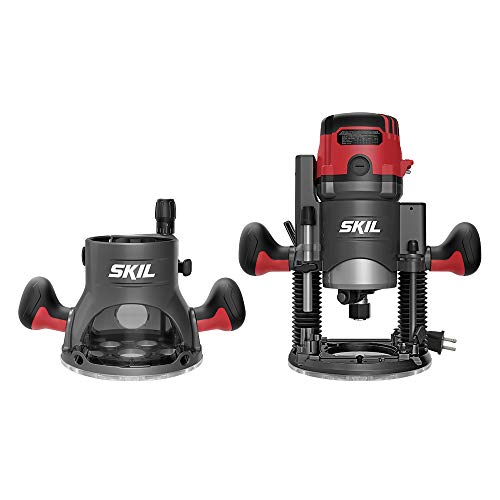
3. SKIL RT1322-00 14 Amp Plunge and Fixed Base Router Combo
The SKIL combo makes its case on motor size: 14 amps, the highest amp rating among the corded combo kits here, bundled with both plunge and fixed bases. Amps are not the whole story of router performance, but in a listing-to-listing comparison they are the figure SKIL chose to lead with, and for a buyer whose circle cutting involves thick baffles, dense material, or long days of repeated cuts, a larger motor offers headroom that shows up as a tool that does not bog down when a pass runs deeper than planned. The combo format keeps the same practical advantage as the kits above: one base for the jig, one for everything else.
SKIL occupies the value end of the established power tool brands, and this kit is the pick in this guide for a builder setting up a first dedicated baffle-cutting station on a controlled budget, without dropping to an unknown name. The plunge base covers the jig work this guide is about; the fixed base covers the roundovers and edge work that finish a cabinet, including the baffle edge treatments that make a DIY enclosure look intentional. If your projects extend to the smaller drivers and cabinets behind guides like best 8 ohm bookshelf speakers, the same kit scales down to those baffles without any change of setup beyond jig hole and bit.
Who should choose it: first-time circle jig users and budget-conscious builders who still want a two-base corded kit from a known brand, with motor headroom to spare. The watch-out is that the listing is spare with secondary details compared with the DEWALT and Bosch listings, so confirm the specific features that matter to you, such as the speed control arrangement and the jig fit of the plunge base, on the product page before ordering. On the core proposition, a 14-amp motor and both bases in one box, it is easy to understand.
4. DEWALT DCW620B 20V MAX XR Plunge Router, 2-1/4 Peak HP, Tool Only
The DCW620B is the cordless plunge router in this guide, and its listing is specific: a 20V MAX XR tool with 2-1/4 peak HP, sold as tool only. That combination matters for circle work in a way that is easy to underestimate until you have walked a corded router through a full circle. On a jig, you physically move around the workpiece as the cut progresses, and a power cord has to be shepherded the whole way so it does not snag the jig, drag across the fresh cut edge, or pull at the tool mid-pass. A cordless plunge router removes that entire category of annoyance. The sweep is just you, the tool, and the pivot pin.
The peak horsepower figure places it, on paper, in the same class as the big corded combo kits, which reflects how far cordless routing has come; this is a full plunge router that happens to run on a battery, not a trim tool scaled up. Tool only is the honest caveat in the listing: no battery or charger is in the box, so the real entry cost depends entirely on whether your workshop already runs the DEWALT 20V MAX platform. For a shop already on that platform, this is the most convenient jig router in the guide. For a shop that would be buying into the platform for this one tool, the corded kits above are the more economical route to the same circles.
Who should choose it: DEWALT platform owners first, and any builder whose workshop layout makes cord management around a bench genuinely awkward. Battery discipline is the watch-out: circle cutting is continuous-load work, so start a baffle session with a freshly charged, higher-capacity pack rather than the compact battery that happened to be on the charger, and keep a second pack ready if you are cutting a batch of baffles. Confirm jig compatibility for its base as you would for any pick here, and the cordless circle experience is the smoothest in this list.
5. Makita RP2301FC 3-1/4 HP Plunge Router with Variable Speed
The Makita is the heavyweight: a dedicated plunge router rated at 3-1/4 HP, with variable speed, and no fixed base in the listing because this tool does one job at full scale. That power figure is the highest in this guide, and it defines the use case. Thick baffles, dense sheet material, large-diameter drivers needing large cutouts, and long sessions cutting baffles for a whole set of cabinets are where a router of this class stops feeling like excess and starts feeling appropriate. Each pass can run a little deeper with control, the motor holds its composure in material that makes smaller tools work hard, and variable speed lets you slow a large bit down to a sane surface speed, which is a safety and cut-quality point as much as a performance one.
The trade is handling. A 3-1/4 HP plunge router is a substantial tool to swing around a pivot pin, and on a circle jig that weight cuts both ways: it plants the tool firmly on the jig and resists the bit’s urge to wander, and it also tires the operator across a long afternoon of sweeps. For the builder cutting one pair of bookshelf baffles a year, it is more tool than the job asks for, and the combo kits will feel friendlier. For the builder whose projects run to large floor-standing cabinets, subwoofer enclosures, and repeated thick-panel work, this is the router in the guide that will never be the limiting factor.
Who should choose it: serious and frequent builders, anyone cutting thick or dense baffles regularly, and workshops that want a dedicated plunge machine rather than a base-swapping kit. Note the asterisk Makita itself places after the horsepower figure in the listing, a reminder that peak ratings are measured under each maker’s own conditions, so compare this tool by its class and reputation for sustained work rather than by decimal points. Confirm the jig fit for its base, as always, before the baffle day arrives.
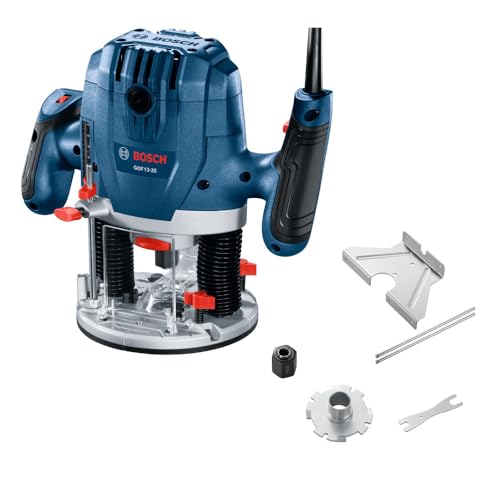
6. BOSCH GOF13-25 1-3/4 HP Mid-Size Plunge Router with Parallel Guide
The Bosch GOF13-25 takes the opposite route from the Makita: a mid-size dedicated plunge router at 1-3/4 HP, with a stated speed range of 11,000 to 28,000 RPM, an ergonomic design, and a detachable parallel guide in the listing. Mid-size is a considered category for jig work. A circle cut is a long, controlled sweep, and a router that is lighter and shaped to be guided comfortably can produce calmer, more consistent circles in the hands of a builder who cuts baffles occasionally than a heavier machine they have to wrestle. The wide speed range supports that versatility, covering small bits at the top end and larger bits turned down toward the bottom of the range.
The detachable parallel guide is not a circle jig feature; it guides straight cuts parallel to an edge, and its presence in the box signals that this router is meant to earn its keep across general cabinet work, not only on baffles. Straight routing matters in speaker building more than beginners expect: cabinet panel grooves, rabbets along edges, and brace work all run straight, and a guide included in the box covers them without another purchase. On the jig itself, the mid-size plunge format does the familiar job: staged depth passes around the pivot pin, with the plunge stop governing the flush-mount recess.
Who should choose it: builders who want a dedicated plunge router that stays manageable, and whose projects mix circle cutting with straight cabinet joinery. It is also a sensible step for someone who found the big combo kits more tool than they wanted to swing. The watch-out is power headroom: at 1-3/4 HP, thick and dense panels simply get cut in more, shallower passes, which is good practice anyway, but plan your pass count accordingly rather than forcing depth the motor did not volunteer for.
7. VEVOR Compact Router 1.25HP with Fixed, Plunge and Tilt Bases, up to 30,000 RPM
The VEVOR kit is the compact, many-bases option: a 1.25HP router supplied with a fixed base, a plunge base, and a tilt base, with variable speed and a stated maximum of 30,000 RPM, aimed at woodworking and furniture making. Three bases in one kit is the headline, and for circle jig work the relevant one is the plunge base, which lets this small router do the staged-depth circle work this guide is about. The tilt base, which angles the bit for beveled cuts, and the fixed base cover the edge and detail work around a cabinet build, so the kit presents itself as a small workshop’s routing department in a single box.
Scale is the honest context. At 1.25HP this is a compact router, and compact routers cut baffles the way compact routers do everything: in shallower passes, with patience, and with excellent maneuverability as the compensation. Swinging a light tool around a pivot pin is genuinely pleasant, control at the start and end of each sweep is easy, and for the thinner baffles of small and medium speakers the power is adequate when the passes are kept sensible. Thick, dense panels for large subwoofer cabinets are where you will feel the ceiling; the Makita and the big combo kits exist for that work. Bit and jig fit also deserve a careful check here, since compact routers use smaller bases and collets than full-size machines, and the jig and bits you plan to use must match the tool’s format.
Who should choose it: builders of small to medium speakers, furniture makers adding occasional circle work, and anyone who values a light, three-base kit over raw cutting muscle. Treat the 30,000 RPM maximum as a small-bit figure, as with any router, and turn the speed down for larger bits. Within its size class, it is the most flexible listing in this guide, and flexibility is its argument.
8. DEWALT DCW600B 20V MAX XR Cordless Router, Brushless, Tool Only
The DCW600B needs the clearest framing of any pick here, so here it is plainly: this listing is for DEWALT’s cordless compact router, brushless and tool only, on the same 20V MAX XR platform as the plunge router reviewed above. Its listing does not name a plunge base. It is included in this guide as the platform companion to the DCW620B, not as a plunge router in its own right, and we will not pretend otherwise. A Jasper circle jig setup is built around plunging in staged passes, so if you are considering this tool for that job, the plunge question has to be resolved first: confirm what base configuration you would actually run, and whether the jig you own or plan to buy supports it, before treating this as your circle-cutting tool.
What this router unquestionably is, is the compact cordless workhorse of the DEWALT routing line: brushless efficiency, no cord, and the size class that handles edge profiles, roundovers, and light trimming all over a cabinet build. In a speaker workshop it pairs naturally with the DCW620B rather than replacing it, one tool living on the circle jig for baffles while the other handles the edge work that finishes the same cabinets. Shops deep in the 20V MAX platform often end up with both for exactly that reason, and listing it here, with its scope stated honestly, reflects that real-world pairing.
Who should choose it: DEWALT platform owners who want the compact cordless half of a two-router workshop, and who have either confirmed a plunge arrangement for jig work or plan to cut their circles with the DCW620B above. Who should not: anyone buying a single router specifically for a Jasper jig on the assumption that this listing includes plunge capability. It does not say that, and your baffle project deserves a tool whose listing does.
Setting up your first jig-guided circle, step by step in brief
Whichever router you choose, the first circle should be a rehearsal in scrap the same thickness as your baffle. Mark a center, drill the pilot hole, mount the jig, and set the radius for a cutout you can measure against a driver or a published cutout dimension. Make the recess pass first at a shallow, measured depth, then deepen in stages for the through cut, supporting the panel so the disc cannot drop at the end. Measure the result: the diameter, the recess depth against the driver flange, and the fit of the driver itself. Adjust the jig setting or the depth stop by what the measurements say, not by what the scale suggested, and write the final settings on the jig or in a notebook. From the second baffle onward, those recorded settings turn circle cutting from an experiment into a routine, which is the state every speaker builder is actually buying when they buy a router and a jig.
Safety belongs in any honest summary of this work. Routers are loud and their bits are unforgiving: eye and ear protection on every pass, dust control for MDF especially, the tool unplugged or its battery out whenever you change bits or settings, and both hands committed to the tool through every sweep. A circle jig makes routing more predictable, not less powerful, and the calm, staged technique described in this guide is as much a safety practice as a quality one.
Bit choice completes the setup, and it is worth a short paragraph of its own. Circle cutting in sheet material is usually done with a straight bit sized to the scale the jig’s hole layout assumes, because the calibrated holes translate into cut diameters only when the bit diameter matches the one the layout was drawn for. Change the bit size and every resulting circle shifts with it, which is a common cause of a first baffle that measures slightly off despite careful setup. Spiral bits are popular for this work because their shearing action tends to leave cleaner edges in plywood and a smoother wall in MDF, and whatever pattern you choose, sharpness matters more than novelty: a dull bit burns MDF, chips veneer, and pushes the router around the pivot instead of letting the jig guide it. Keep the bit you dedicate to baffle work sharp, record its size alongside your jig settings, and the measured, repeatable results described above become your normal outcome rather than a lucky one.
Frequently asked questions
Does the Jasper jig fit every router in this guide? Jig fit depends on the router’s base and mounting pattern, and Jasper designs its jigs around listed router models. Check your exact router against the jig’s fit information before buying either side of the pairing; this applies to all eight picks.
Combo kit or dedicated plunge router? A combo kit gives you a plunge base for the jig and a fixed base for edge work, which suits most workshops. A dedicated plunge router suits builders whose routing is mostly plunge work, or who want the largest or most maneuverable plunge tool without paying for a second base.
How much power does baffle cutting need? Less than folklore suggests, provided passes are shallow. Mid-size routers cut typical baffle panels comfortably. Power earns its keep on thick, dense panels, large cutouts, and long batch sessions, which is where the Makita and the big corded kits pull ahead.
Corded or cordless for circle work? Cordless frees the full-circle sweep from cord management, and the DCW620B brings full plunge capability to that format. Corded tools run indefinitely and cost less to start if you own no batteries. Both cut the same circles; the difference is workflow.
Can a compact router like the VEVOR cut baffles? Yes, with shallower passes and attention to bit and jig format, since compact bases and collets differ from full-size machines. Match the tool’s class to your panel thickness and the job is well within it.
Our verdict
For most builders, the answer is one of the two big corded combo kits: the DEWALT DW618PKB for its complete, circle-ready checklist of plunge base, soft start, and variable speed, or the Bosch 1617EVSPK where microfine depth control makes flush-mount recesses as precise as the work demands. The SKIL combo brings the largest amp rating of the kits to a controlled budget. DEWALT platform owners should look hard at the DCW620B, the cordless plunge router that makes full-circle sweeps effortless, while the DCW600B earns its place only as that tool’s compact companion, with its scope understood. Thick panels and heavy schedules belong to the Makita; manageable, versatile plunge work belongs to the Bosch GOF13-25; and small builds on a light, flexible kit belong to the VEVOR. Pick the router whose listing matches the baffles you actually plan to cut, confirm the jig fit, rehearse in scrap, and the circles will take care of themselves.
Check prices on Amazon
Live listings for the shortlist in this guide are pulled from Amazon below, so prices and availability are always current at the moment you look.



A note on how this guide is funded
Links in this article are affiliate links. If you buy a router through one of them, GizmoVerdict receives a small commission from the retailer and you pay the same as you would otherwise. That arrangement funds guides like this one without charging readers. Our research for this guide drew on the manufacturers’ own listings and on established circle-cutting practice in speaker building; routers appear here because their stated bases, motors, and speed controls suit jig work, and the one listing that does not name a plunge base is flagged for exactly that reason. Check current specifications and jig compatibility on the product and jig pages before you order, since lineups and fit lists are updated over time.